Third Grade Composition Notebooks: How to Choose the Right Ruling
For third grade, the main notebook decision is whether the class expects a grade-specific handwriting ruling or an ordinary wide-ruled composition book. Current school lists show both patterns, so the teacher or supply list should override a generic grade label.
If the format is open, compare ruling, sheet count, binding and cover durability before buying.


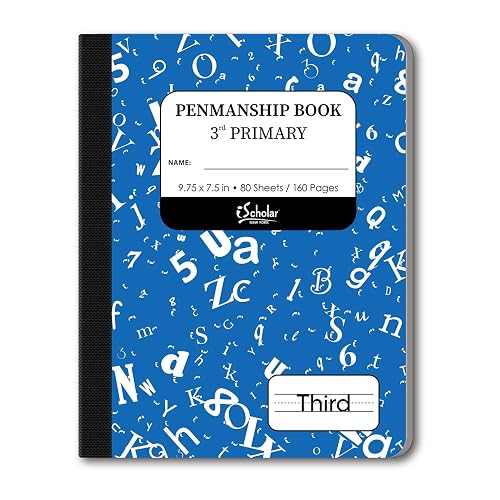
Start with the school supply list
Third-grade requirements are not standardized. Dennis Chavez Elementary currently asks Grade 3 students for 100-page wide-rule composition notebooks, while other schools simply specify composition notebooks without a ruling. That variation matters more than any generic recommendation.
When a list names wide ruling, a color, page count or quantity, match it directly. When it only says composition notebook, you can decide whether a grade-specific handwriting format adds useful guidance.
Grade 3 ruling is a real product format
Grade 3 composition books are not just themed covers. Current Roaring Spring and School Smart products use grade-specific manuscript or skip-line ruling. Roaring Spring’s Grade 3 book is a permanently bound composition format with 50 sheets and a red marble flexible cover; School Smart sells a Grade 3 skip-a-line composition book with 3/8-inch ruling and a skip space.
This creates a genuine choice between guided handwriting pages and conventional wide-ruled pages.
Choose grade-specific ruling when handwriting guidance still matters
A grade-specific page can help when the classroom is still working explicitly on letter height, spacing and consistent handwriting. Current Grade 3 products use intermediate or dashed guides rather than plain ruled lines.
The important feature is the page layout, not the words “Grade 3” on the cover. Inspect the ruling specification or page preview because products can describe line measurements differently.
Choose wide ruling when the class has moved to ordinary note pages
Wide-ruled composition books are common on third-grade supply lists. They remove the handwriting guide structure and provide a conventional lined page for notes, vocabulary, writing assignments and subject work.
If the teacher asks for wide ruled, do not substitute a primary or skip-line notebook simply because it is marketed for Grade 3. Classroom consistency is the stronger requirement.
Watch the transition from second-grade formats
Third grade often sits between heavily guided primary pages and ordinary ruled notebooks, but the timing of that transition varies by classroom. That is why buying another second-grade-style primary journal by habit can be a mistake.
Compare the actual inside page with what the student currently uses. A useful upgrade gives enough guidance without forcing oversized writing zones that no longer match the assignment.
Check capacity before buying several books
Current grade-specific composition books are available with different capacities. Roaring Spring lists a 50-sheet Grade 3 composition book, while School Smart has a 24-sheet Grade 3 model. School lists may instead request 100-page or 100-sheet wide-ruled books.
Sheets and pages are not interchangeable terms. Verify how the seller counts capacity, especially when a teacher gives a minimum page requirement.
Binding and cover matter in daily classroom use
A composition notebook is useful partly because its pages remain in a fixed sequence. Current Grade 3 products include sewn construction, and flexible marble covers are common. Secure binding is useful for work that needs to stay together across a term.
Cover color can also be functional when a class uses color coding. If no color is specified, durability and correct ruling matter more than decoration.
Do not buy by grade label alone
A “third grade” cover can hide an ordinary ruled notebook, while a less prominently labeled product may have the exact manuscript ruling a teacher wants. Use four checks: required ruling, actual page layout, capacity and binding.
- Teacher specifies wide ruled: buy wide ruled.
- Teacher specifies manuscript or skip-line: verify the exact guided ruling.
- No ruling specified: compare the student’s current handwriting needs with ordinary wide ruling.
- Quantity specified: confirm each book’s sheet/page count before buying a pack.
What to avoid
- Do not assume every third-grade classroom uses the same ruling.
- Do not treat “primary,” “Grade 3,” and “wide ruled” as synonyms.
- Do not confuse sheets with writable page sides.
- Do not choose a themed cover before checking the inside page.
- Do not override a school supply list with a generic online recommendation.
Frequently asked questions
What ruling should a third grader use?
There is no universal third-grade ruling. Current school lists include wide-ruled composition notebooks, while current manufacturers also sell Grade 3 manuscript or skip-line composition books. Follow the teacher or school requirement first.
Is Grade 3 ruling the same as wide ruling?
No. Grade-specific manuscript formats can include dashed or intermediate handwriting guides. Wide ruling is a conventional lined page without the same guide structure.
How many sheets should a third-grade composition notebook have?
There is no single required capacity. Current Grade 3 products include 24-sheet and 50-sheet examples, while school lists may request 100-page or other capacities. Match the classroom requirement and verify whether the listing counts sheets or pages.
Should I buy a primary composition notebook for third grade?
Only if the classroom requires that guided format. Third grade can be a transition point toward ordinary wide ruling, so the current assignment and teacher specification are better guides than the grade label alone.
RELATED POST
