How to Choose a Composition Notebook for Environmental Science
Environmental science does not have one universal composition-notebook format. Current course lists range from ordinary wide-ruled composition books to graph-paper lab books, and some courses allow a binder instead.
Start with the syllabus, then choose ruling, capacity and binding for the actual mix of notes, data, diagrams and lab records.




Start with the course requirement, not the subject name
Environmental science can combine lecture notes, field observations, calculations, tables, diagrams and laboratory work. That variety is exactly why the teacher’s specification matters. Rockdale Magnet’s current AP Environmental Science list allows a composition notebook or paper and binder. Santa Rosa Academy currently asks for a wide-ruled composition notebook. A current AP Environmental Science course at York High School requires a graph-paper lab composition notebook and separately allows a spiral or additional composition notebook for ordinary notes.
Those examples show that environmental science notebook is not a single physical standard. Buying the wrong ruling because it seems more scientific can be less useful than following the actual class system.
Choose graph ruling when the work needs alignment
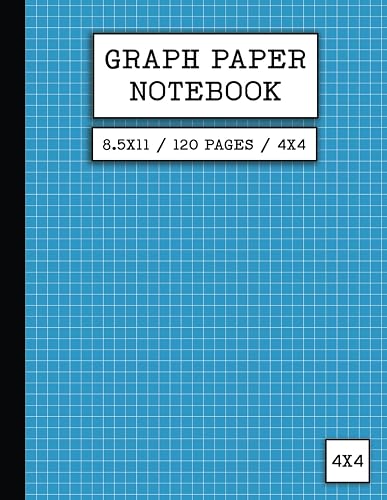
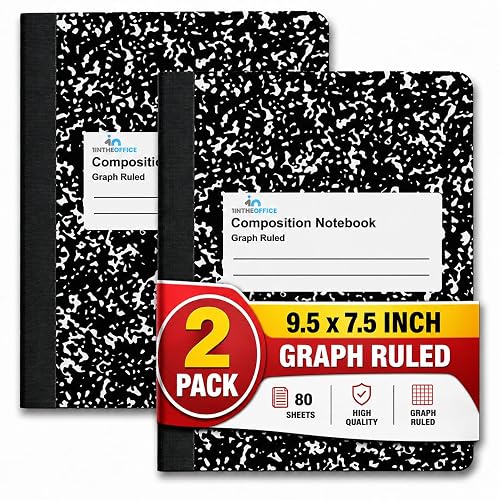
Graph or quad ruling is useful when the notebook regularly holds data tables, axes, scaled sketches or calculations that benefit from consistent alignment. Current physical composition books include 4-squares-per-inch and other quad formats in fixed or sewn constructions.
Graph paper should still be treated as a functional choice, not a default for every environmental science course. If the class mainly uses the notebook for prose notes and reflections, lined pages may be easier to write on.
Choose lined ruling for text-heavy notes
Wide or college ruling can work well for definitions, readings, lecture notes and written explanations. Wide ruling gives more vertical space; college ruling fits more lines on a page. The correct choice depends on both handwriting and the course requirement.
Santa Rosa Academy’s current list is a useful reminder that a science course can explicitly request wide ruling. Do not replace a specified lined book with graph paper unless the teacher allows it.
Separate lab records from class notes when required
A lab notebook may have stricter expectations than an ordinary class notebook. Some courses want a dedicated graph composition book for laboratory data and a separate notebook for lectures or homework. Keeping these roles separate can make records easier to review and prevents ordinary notes from consuming space reserved for experiments.
If the course calls the book a lab notebook, verify whether it requires fixed pages, a particular grid, page numbering or any other specification before buying. A standard composition notebook is suitable only when the course accepts it.
Capacity should follow the workflow
Environmental science can generate a mix of long notes and compact data records. A higher sheet count can reduce the risk of running out of room, but it also adds bulk. Estimate whether one notebook is expected to last a semester, a full year or only a lab unit.
Also verify whether a listing counts sheets or writable page sides. Retail descriptions are not always consistent, so compare the actual specification rather than relying on the number alone.
Binding matters when sequence matters
Sewn or otherwise fixed-bound composition books keep pages in sequence, which can be useful for chronological observations and lab records. Current graph and lined composition books are available with sewn binding, flexible covers and other constructions.
Do not assume every composition-style product is permanently bound. Some graph products are perforated or designed for page removal. If page retention is important, verify the exact construction.
Use the smallest decision set that satisfies the class
For many students the practical choice is simple: one specified composition book for class notes, or one lab book plus one note book when the syllabus separates those roles. Avoid buying several specialized notebooks before the teacher confirms how they will be used.
- Graph ruled: best when the course explicitly requires grids or the work regularly uses tables and plots.
- Wide ruled: useful for larger handwriting and text-heavy class notes when permitted.
- College ruled: useful for denser text notes when permitted.
- Dedicated lab book: follow any binding, grid or record-keeping specification exactly.
What to avoid
- Do not assume every environmental science class requires graph paper.
- Do not substitute an ordinary notebook for a specified lab notebook without permission.
- Do not confuse sheets with page sides.
- Do not infer paper quality, water resistance or pen performance from the subject label.
Frequently asked questions
These questions cover the practical decisions that matter most for this use.
Does environmental science require a graph composition notebook?
Not universally. Current 2026–2027 course lists vary: some require a graph-paper lab composition notebook, some accept an ordinary composition notebook, and others allow a binder or another note system.
Should lab notes and class notes use the same notebook?
Only if the course permits it. One current AP Environmental Science course explicitly separates a graph-paper lab composition notebook from a second notebook for class notes.
Is wide ruling acceptable for environmental science?
It can be when the teacher requests or allows it. A current 2026–2027 Environmental Science supply list specifically asks for a wide-ruled composition notebook.
What matters most when buying?
Follow the course specification first, then verify ruling, capacity, binding and whether the notebook is intended for lab records, class notes or both.
RELATED POST
