How to Choose a Composition Notebook for Creative Writing
A composition notebook can be a strong creative-writing tool when you want ideas, scenes and drafts to stay together in one fixed record. The main choice is not the cover: it is whether lined or blank pages fit the way you draft.
Choose the page layout first, then compare capacity, size, cover and binding.
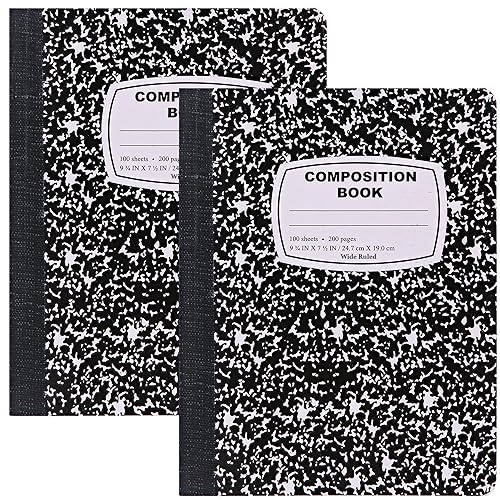


Start with how you actually write
Creative writing can mean long prose drafts, poetry, character notes, scene fragments, story maps or mixed text and sketches. Current mainstream composition books are explicitly marketed for creative writing, but no single ruling fits all of those tasks.
The useful decision is whether the page should guide your lines or stay visually open.
Lined pages work well for prose-heavy drafting
Wide-ruled and college-ruled composition books are both current options for creative writing. Wide ruling gives larger handwriting and revisions more vertical room; college ruling fits denser prose and compact notes.
Choose by handwriting and drafting density, not by age or writing experience.
Blank pages suit visual planning and mixed layouts
An unruled composition notebook can be better when story maps, sketches, diagrams or free-form brainstorming appear frequently beside text. Blank pages remove line constraints while preserving the fixed-bound composition format.
Do not assume blank composition paper is drawing-grade; paper performance remains product-specific.
Primary draw-and-write pages solve a narrower job
Current primary composition journals combine picture space with handwriting guides and are explicitly positioned for creative-writing exercises for beginning writers. That layout is useful only when illustration and early-writing guidance are part of the task.
Older or experienced writers usually gain more flexibility from ordinary lined or blank pages unless a class specifies otherwise.
Fixed pages can help preserve drafting continuity
A composition notebook keeps notes in sequence, which is useful when character ideas, scenes and revisions build on earlier pages. A current school supply list even specifies a dedicated notebook or composition notebook for Creative Writing, showing the format is used as a course-specific writing record.
If you constantly remove, reorder or submit individual pages, a spiral or binder format may fit better.
Capacity should match the project
A 100-sheet composition book can keep a long project together, while a thinner book is easier to dedicate to one story, unit or collection of poems. More capacity also adds bulk.
Check whether the seller counts physical sheets or writable page sides before comparing products.
Size changes the balance between writing room and portability
The common 7.5 by 9.75 inch format gives enough horizontal room for substantial prose while remaining easy to carry. Mini books are better for quick idea capture but can feel cramped for long drafts.
Choose the smallest size that still gives your normal writing enough room.
Cover construction matters after the page format
Flexible poly covers reduce rigidity, while hard covers can provide a firmer writing surface away from a desk. Neither cover type determines ruling or paper quality.
Choose durability around where the notebook travels, not around the idea that one cover makes writing more creative.
What to avoid
A creative-writing notebook should support the workflow rather than become another constraint.
- Do not assume every writer needs lined pages.
- Do not buy blank pages expecting sketchbook-grade paper without checking.
- Do not maximize capacity if a thick book becomes inconvenient to carry.
- Do not choose a decorative cover before checking the inside format.
- Do not choose fixed pages when frequent removal or rearrangement is essential.
Frequently asked questions
These questions focus on page and format choices for creative-writing work.
Are composition notebooks good for creative writing?
They can be when you want drafts and ideas to remain together in sequence. They are less convenient when pages must be rearranged or removed often.
Is lined or blank paper better for creative writing?
Lined pages suit prose-heavy drafting; blank pages give more freedom for story maps, sketches and mixed layouts. Choose around the work you actually do.
Is wide or college ruling better for writing?
Wide ruling gives larger handwriting more room, while college ruling fits denser prose. Neither is universally better.
How many sheets should a writing composition notebook have?
Choose enough capacity for the project without adding unnecessary bulk, and verify whether the listing counts sheets or page sides.
RELATED POST
