How to Choose a Composition Notebook for Work
A composition notebook can be a strong work notebook when you want meeting and project notes to stay together as one continuous record. The format is less useful when individual sheets need to be removed, handed off or rearranged often.
Start with that workflow decision, then compare ruling, size, capacity, cover and binding.
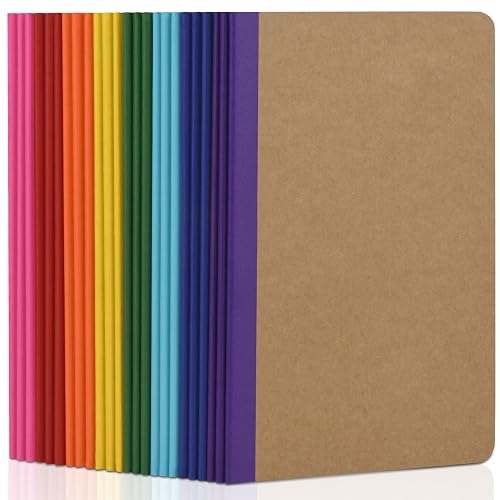


Choose fixed pages only when continuity helps
Composition notebooks keep notes in a fixed sequence, which can be useful for recurring meetings, project histories and reference notes that are reviewed later. Current work-oriented composition products include sewn and glue-bound constructions, so verify the exact binding rather than assuming every book is built identically.
If your workflow regularly requires pages to be removed or transferred, a spiral or binder format may be more practical.
Match ruling to the way you take meeting notes
College or tighter ruling suits compact handwriting and dense notes. Wide ruling gives larger handwriting, corrections and annotations more vertical room. Work use does not make one ruling automatically better.
If you mix diagrams with text, check whether lined pages still give enough freedom; if spatial alignment is central, graph or another ruling may be more appropriate.
Size is a desk-versus-carry decision
Current composition catalogues include common school-size books as well as smaller work-oriented formats. A larger page gives more room for agendas, action items and diagrams, while a compact book is easier to carry between meetings or on a commute.
Choose the smallest format that still gives your normal notes enough writing room.
Capacity should follow the life of the project
A higher sheet count can keep a long project or recurring meeting series in one book. A thinner notebook reduces bulk and can make it easier to separate clients or projects.
Check whether the seller counts sheets or writable page sides before comparing capacity.
Cover construction matters when the notebook travels
Work-oriented composition products currently include flexible, sewn and harder-cover examples. A rigid cover can provide writing support away from a desk, while a flexible cover can reduce bulk in a laptop bag.
Cover type does not determine paper quality or ruling, so treat it as a separate handling decision.
Composition format works well for an archive
When completed notebooks are kept by date or project, fixed pages make each book easy to treat as one finished record. That can be useful for reviewing decisions and meeting sequences later.
Do not treat a composition notebook as a formal records system when your workplace has specific retention, privacy or compliance requirements.
When another format may fit work better
A composition notebook is not the right answer when removable pages, binder filing or constant page reordering are central. The fixed binding is valuable only when page continuity is part of the job.
Choose the format around the workflow rather than around a professional-looking cover.
What to avoid
The main mistake is buying a notebook for its office appearance before checking how notes are actually managed.
- Do not assume work notes require college ruling.
- Do not maximize sheet count if the extra bulk makes the book harder to carry.
- Do not assume a hard cover means better paper.
- Do not choose fixed pages when frequent page removal is essential.
Frequently asked questions
These questions focus on the practical work decisions that make a composition notebook useful.
Are composition notebooks good for work meetings?
They can be when you want notes to stay together in chronological order. If sheets need to be removed or distributed often, another format may be easier.
Is college ruled better for work?
Only if compact handwriting and denser notes suit you. Wide ruling can be more comfortable for larger handwriting and annotations.
What size composition notebook is best for work?
Use a larger page when writing area matters and a smaller format when portability matters more. Choose around where the notebook will be used and carried.
Should a work composition notebook have a hard cover?
Not necessarily. A rigid cover adds writing support, while a flexible cover can reduce bulk. Choose after considering daily transport.
RELATED POST
