How Many Pages Are in a Composition Notebook? Sheets vs Pages Explained
A composition notebook can be described by physical sheets or by writable page sides, so the numbers on two listings may look different even when the books hold a similar amount of paper. If both sides of every sheet are writable, a 100-sheet composition book provides about 200 writable pages.
Before comparing capacity, check which unit the seller is using and then choose the sheet count around how long the notebook must last and how much you write.


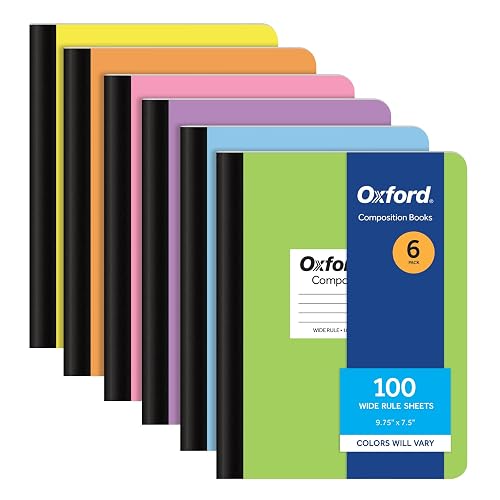

Sheets and pages are not the same unit
A sheet is one physical leaf of paper. A page is one side of that sheet. When both sides are intended for writing, 80 sheets can provide about 160 writable pages and 100 sheets can provide about 200.
That sounds simple, but product listings do not always use the words consistently. One retailer may emphasize sheets while another may emphasize pages, so compare the actual specification rather than the headline number alone.
How many pages do common composition notebooks provide?
There is no single capacity shared by every composition notebook. Current composition-book ranges include multiple sheet counts, and the right one depends on the job rather than on a universal standard.
- 60 sheets: about 120 writable sides when both sides are used; useful when low bulk matters more than maximum capacity.
- 70 sheets: about 140 writable sides; a lighter option for shorter units or a notebook that will not carry a full year of notes.
- 80 sheets: about 160 writable sides; common in graph and other formats where a moderate capacity keeps the book manageable.
- 100 sheets: about 200 writable sides; a common full-size classroom capacity and a strong default when one book must hold substantial notes.
- 120 sheets: about 240 writable sides; useful when continuity matters more than keeping the book thin and light.
Choose capacity by how the notebook will be used
The best count is the smallest capacity that comfortably covers the intended work. A short course, single project or dedicated vocabulary book may not need 100 or 120 sheets. A semester-long class, research notebook or long-running journal may benefit from more room.
Higher capacity is not free: more sheets normally mean more bulk and weight. If the notebook travels every day, carrying two thinner books for separate subjects can sometimes be more practical than one very thick book.
Ruling changes how far a given page count goes
Two 100-sheet composition notebooks can feel very different in use. College ruling fits more lines on each page than wide ruling, while graph ruling changes the page from prose space into a grid for calculations, plots or diagrams. Primary ruling may devote more vertical room to each line and can include picture space.
That means capacity should be considered together with the page layout. Do not choose a higher sheet count simply because you expect to write a lot; first make sure the ruling matches the work.
PurposeMatch: ten useful capacity configurations
The useful comparison is not “more pages are better.” These ten configurations represent genuinely different jobs a composition notebook can perform.
- 60-sheet lightweight book: best for short units, one project or low-bulk carrying.
- 70-sheet everyday class book: useful when a course requires a dedicated notebook but the expected writing volume is moderate.
- 80-sheet balanced notebook: a middle ground between portability and continuity.
- 80-sheet graph book: suited to calculations and diagrams where grid ruling matters more than maximum page count.
- 100-sheet wide-ruled book: useful for larger handwriting and general classroom notes.
- 100-sheet college-ruled book: better for dense notes and smaller handwriting.
- 100-sheet primary-ruled book: useful when beginner-friendly line structure is the deciding feature.
- 100-sheet durable-cover book: appropriate when the same notebook must survive daily transport for a long period.
- 120-sheet high-capacity book: useful for long courses, extensive records or one-volume continuity.
- High-capacity graph configuration: useful when repeated technical work needs both grid alignment and enough pages to remain in one sequence.
When 100 sheets are a sensible default
Mead currently lists full-size composition books with 100 sheets in common rulings, which helps explain why shoppers often encounter that capacity. It is a useful reference point, not a rule.
If you know that a class or project will generate fewer notes, an 80-sheet or lighter book can reduce bulk. If continuity matters and the notebook will be used heavily, a 120-sheet option may be easier than starting a second volume.
Do not compare “200 pages” with “100 sheets” as if they were automatically different
This is the most common capacity mistake. When both sides are counted, a listing that says 200 pages may describe essentially the same writing capacity as a 100-sheet book. Confirm the manufacturer or retailer specification before assuming one notebook contains twice as much paper.
Use the existing capacity pages for the final choice
Once you understand the unit, the next decision is whether a specific count fits your work. Composition-Notebook.com already separates the practical trade-offs of 60-, 70-, 80-, 100- and 120-sheet formats so those pages can handle the detailed capacity choice without turning every wording variation into a new URL.
Mistakes to avoid
Capacity is easy to compare only after the units are clear.
- Do not assume every composition notebook contains 100 sheets.
- Do not treat “pages” and “sheets” as interchangeable without checking the listing.
- Do not buy the highest count automatically if portability matters.
- Do not ignore ruling: denser or more open layouts change how much work fits on each side.
- Do not compare capacity using title text alone when the specification table gives a clearer unit.
Frequently asked questions
These answers clarify the terminology that causes most page-count confusion.
How many pages are in a standard composition notebook?
Many full-size composition books are sold with 100 sheets, which can provide about 200 writable page sides when both sides are used. Other composition notebooks use 60, 70, 80, 120 or different sheet counts, so check the exact product.
Is 100 sheets the same as 200 pages?
It can be when both sides of each physical sheet are counted as pages. Always confirm how the manufacturer or retailer defines the number.
Is an 80-sheet composition notebook enough for a semester?
It can be, but it depends on note density, ruling and how often the notebook is used. A class with frequent written work may need more capacity.
Does a higher sheet count make a notebook better?
No. More sheets add capacity but can also add bulk. The best count is the one that covers the intended work without making the notebook unnecessarily heavy.
RELATED POST
