5×5 Quad-Ruled Composition Notebooks: When a Denser Grid Helps
A 5×5 quad-ruled composition notebook uses five grid squares per inch, so each square is about 0.2 inch wide and high. Compared with 4×4 ruling, it gives you more grid divisions across the same page, which can help with plotting, compact calculations and structured tables.
The denser grid is not automatically better. Check whether the smaller cells fit your handwriting and diagrams, then verify size, capacity and binding.


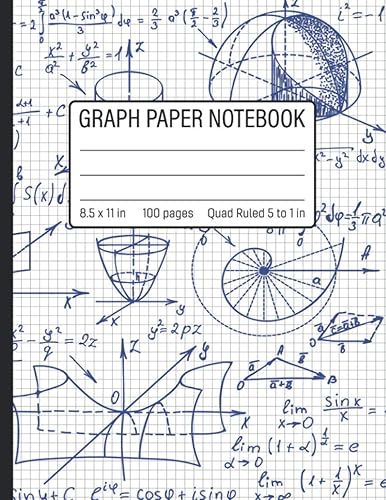

What 5×5 quad ruling means
In composition notebooks, 5×5 commonly means five squares per inch in both directions. Dividing one inch into five equal cells gives a spacing of 0.2 inch. Current BAZIC, Roaring Spring and Staples composition books explicitly use this density.
5×5 vs 4×4: choose density, not a label
A 5×5 grid fits more divisions into each inch than a 4×4 grid. That can be useful when you want finer alignment for graphs, tables or compact numerical work. A 4×4 grid gives each number, symbol or label more room.
Neither format is universally better. Choose the density that matches the scale of your work and the size of your handwriting.
When a denser grid helps
Five-squares-per-inch ruling can work well for plotting, data tables, equations and technical sketches where repeated alignment matters. It can also fit more structured information on a standard composition page without requiring a larger notebook.
If a teacher or course specifies 5×5 ruling, follow that requirement exactly rather than substituting another graph density.
When 4×4 may be easier to use
Larger quarter-inch cells can be more comfortable for larger handwriting, annotations and diagrams with prominent labels. If you routinely write across multiple 5×5 cells, the extra density may not provide a practical benefit.
Page size still changes total working area
Grid density and notebook dimensions are separate specifications. Current 5×5 composition books include the familiar 7.5 by 9.75 inch footprint, while other graph notebooks use larger formats. Compare physical dimensions before assuming two 5×5 products provide the same total plotting area.
Capacity and binding are separate decisions
Current 5×5 composition products vary in capacity: BAZIC and Roaring Spring examples use 100 sheets, while the Staples example uses 80 sheets. All three verified examples use fixed sewn or casebound construction, but 5×5 ruling itself does not guarantee any binding type.
Check sheets versus pages, perforation and binding on the exact product if page retention matters.
A practical buying checklist
- Confirm that 5×5 means five squares per inch.
- Compare the 0.2-inch cells with larger 4×4 cells.
- Check physical page dimensions.
- Verify sheet or page count consistently.
- Check binding and perforation separately from ruling.
- Follow any teacher or course specification exactly.
Frequently asked questions
What does 5×5 quad ruled mean?
It means five grid squares per inch, giving each square a spacing of about 0.2 inch.
Is 5×5 denser than 4×4 graph paper?
Yes. Five squares fit into each inch instead of four, so the cells are smaller and there are more grid divisions across the same page.
Is 5×5 better for math?
Not universally. The denser grid can help with compact plotting and calculations, while larger cells can suit bigger handwriting and labels. Follow any course requirement first.
Are all 5×5 composition notebooks sewn?
No. The verified examples include sewn construction, but grid density does not determine binding. Check the exact product.
RELATED POST
