Water-Resistant Composition Notebooks: What Protection Means
A water-resistant composition notebook is useful only if you understand what is actually protected. Current products often apply the claim to the cover, not to every sheet or to the notebook as a sealed object.
Verify the exact claim first, then choose ruling, binding, capacity and size around the work you need to do.


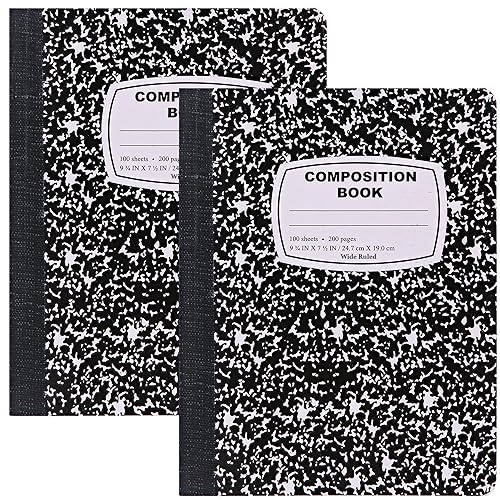


What water-resistant usually means here
For composition books, water resistance is commonly a cover property. Rhodia describes its current B5 Composition Book as having a water-resistant coated cover. Enday describes a water-resistant front cover on its graph-ruled composition book, while current Five Star graph composition listings describe a water-resistant one-piece plastic cover.
That is useful protection against routine handling and light moisture, but it is not evidence that the paper, page edges or entire notebook are waterproof.
Verify the exact claim before comparing materials
Do not use cover material as a shortcut. A coated card cover can be sold as water-resistant, and a plastic or poly cover can also carry a water-resistance claim. The relevant question is what the exact product specification says, not whether the cover looks glossy or flexible.
- Look for explicit wording such as water-resistant or moisture-resistant in the current product specification.
- Check what the claim applies to. A water-resistant cover is not the same as water-resistant pages.
- Avoid upgrading the claim. Water-resistant does not automatically mean waterproof or suitable for immersion.
Ruling still comes before weather protection
A protective cover cannot rescue the wrong page layout. Current water-resistant composition products exist in lined and graph formats, so choose the ruling for the actual task first. Graph ruling can suit calculations and diagrams; lined ruling is usually more direct for prose notes and continuous writing.
If a class or course specifies a ruling, follow that requirement before treating moisture resistance as a deciding feature.
Binding and capacity remain separate choices
Current examples also differ in construction. Rhodia uses threadbound construction, while Five Star graph composition books use sewn pages. Binding affects how pages stay together and how the book opens; it should not be inferred from the cover’s moisture claim.
Capacity also varies. Compare sheets or pages carefully and avoid assuming that a more protective cover means a higher-capacity notebook.
When the feature is genuinely useful
Water-resistant cover protection makes the most sense when a composition notebook travels frequently, shares space with drink bottles, or is used in environments where damp surfaces and small splashes are plausible. In those situations, the cover feature can reduce one obvious vulnerability without changing the fixed-bound composition workflow.
For a notebook that stays mainly on a dry desk, ruling, writing comfort, capacity and binding may deserve higher priority than a moisture-resistance claim.
Know the limits before relying on it
Exposed page edges and ordinary paper can still be vulnerable to water. Unless the exact manufacturer explicitly states broader protection, do not treat a water-resistant cover as permission to leave the notebook in rain, submerge it or write on wet pages.
If the notebook will face genuinely harsh outdoor or wet conditions, verify a product designed and specified for that environment rather than stretching a limited cover claim beyond its wording.
A practical buying checklist
Use moisture resistance as one criterion inside the full composition-notebook decision.
- Confirm the exact water- or moisture-resistance wording.
- Check whether it applies only to the cover.
- Choose lined, graph or another ruling for the actual work.
- Verify binding and whether pages are meant to stay fixed.
- Check size and sheet count separately.
- Prefer the feature when routine moisture exposure is realistic, not just because it sounds more durable.
Frequently asked questions
The key is to separate a verified cover claim from assumptions about the rest of the notebook.
Is a water-resistant composition notebook waterproof?
Not necessarily. A product may describe only its cover as water-resistant. Do not assume the pages, edges or whole notebook are waterproof unless the manufacturer explicitly says so.
Does a poly cover automatically mean water-resistant?
No. Poly describes a cover material; water resistance is a performance claim that should be verified on the exact product.
Should I choose water resistance before ruling?
Usually no. Choose the page ruling that fits the class or task first, then compare cover protection among composition notebooks that meet that requirement.
Who benefits most from a water-resistant cover?
It is most relevant for people who carry notebooks frequently or expect occasional splashes or damp surfaces. For mostly desk-based use, other specifications may matter more.
RELATED POST
