Composition Notebook vs Binder: Which System Fits Your Work?
Choose a composition notebook for a compact permanent record; choose a binder when pages must move, expand or accept full-size handouts. The central trade-off is fixed sequence versus modular organization.
Decide how the material changes over time before comparing ruling, capacity and cover.


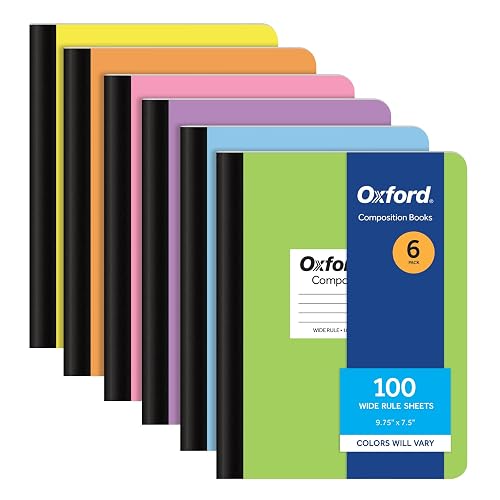
Composition notebook vs binder: the quick decision
A composition book keeps its writing pages together in a predetermined order. A ring binder holds separate punched sheets that can be added, removed and rearranged.
- Choose composition for chronological notes, portability and minimal setup.
- Choose a binder for growing collections, dividers, replaceable pages and full-size documents.
- Use both when daily notes need a fixed record but reference handouts need modular storage.
Fixed pages protect sequence
A sewn or otherwise fixed-bound composition notebook makes it difficult to reorder pages accidentally. That supports journals, lab-style records, class notes and meeting logs where chronology matters.
The limitation is equally clear: once the notebook fills, it cannot simply accept another stack of paper. For a closer look at page retention, use our non-perforated composition notebook guide.
Binders make the contents expandable
A binder can accept new pages, dividers, sheet protectors and printed materials. That flexibility helps when a course or project grows unpredictably or when topics must be reorganized.
Modularity adds work. Pages need punching or pre-punched paper, sections need filing, and loose sheets can tear around the holes or end up in the wrong place. A binder only stays organized when the filing habit is consistent.
Portability usually favors composition books
A standard composition notebook is a single compact object with no ring mechanism. Classroom comparisons commonly identify that smaller footprint as an advantage for students who carry materials throughout the day.
A binder’s bulk changes with ring size, paper, dividers and pockets. It may work well when stored in one classroom or office but become cumbersome when carried with several books.
Handouts are the dividing line
If most information is handwritten directly into the notebook, fixed pages are efficient. If a course distributes many Letter-size worksheets, a binder accepts them without trimming or folding.
Interactive-notebook users can glue or tape selected materials into composition books. A composition notebook with a pocket can hold a small number of loose sheets, but it is not a high-capacity substitute for a binder.
Writing comfort depends on the setup
Composition books can provide a relatively flat, uninterrupted writing surface, especially when the binding opens well. Binder rings may interfere with the writing hand near the center, although pages can be removed temporarily for easier writing.
Left-handed writers should consider where the obstruction sits as well as whether the notebook opens flat. Our left-handed composition notebook guide covers that physical decision.
Capacity works differently
A composition notebook has a fixed sheet count. A binder’s capacity depends on ring size and paper thickness, but overfilling makes pages harder to turn and can strain the mechanism.
Do not compare “100 sheets” in a composition book directly with a binder’s nominal ring size. Estimate the actual course or project load, including handouts and dividers.
Cost includes the complete system
A composition book is normally ready to use as purchased. A binder may also require filler paper, dividers, pockets, reinforcements or sheet protectors. Current prices change, so compare the complete setup rather than one cover against one notebook.
When an interactive composition notebook wins
Interactive notebooks use fixed pages as a base for foldables, pasted notes, drawings and reflections. They can be effective when the class values a continuous record and inserted material remains limited.
If worksheets dominate, repeated cutting and gluing creates bulk. Compare our interactive composition notebook guide before committing to the method.
Buying checklist
Choose the system from the way information enters and changes.
- Must pages remain in chronological order?
- Will you add or replace paper frequently?
- How many full-size handouts must stay with the notes?
- Will the system travel daily?
- Do rings interfere with writing comfort?
- Is fixed capacity sufficient for the full course or project?
- What accessories are required beyond the initial purchase?
Bottom line
A composition notebook is the simpler fixed record; a binder is the more adaptable filing system. Choose permanence and portability when the work grows in sequence, or modularity when the contents must keep changing.
Frequently asked questions
These answers focus on fixed pages, modular paper and the practical cost of each system.
Is a composition notebook better than a binder?
It is better when portability, fast setup and a permanent sequence matter. A binder is better when pages must be added, removed or reorganized.
Can I add worksheets to a composition notebook?
You can glue or tape in a limited number of sheets, or use a model with a pocket. If full-size handouts accumulate regularly, a binder may be more practical.
Which is easier to carry?
A standard composition notebook is usually slimmer and more self-contained. Binder bulk depends on ring size, paper quantity, dividers and accessories.
Which keeps notes in order more reliably?
A fixed-page composition notebook preserves chronological sequence naturally. A binder can be reorganized but depends on the user filing pages consistently.
RELATED POST
