A5 Composition Notebooks: When Smaller Pages Work
An A5 composition notebook is useful when portability matters more than the writing area of a standard school composition book. The key is to verify the actual dimensions: sellers use “A5” and “A5+” inconsistently, so size should be checked before ruling, cover or page count.


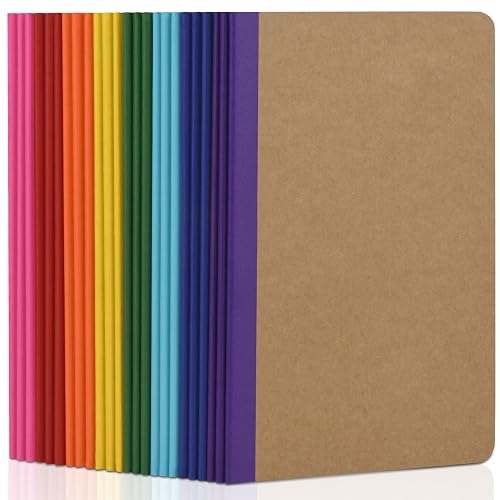


When an A5 composition notebook makes sense
A smaller page can work well for commuting, short class notes, meetings, journaling and everyday carry. It is less attractive when you regularly need wide tables, large diagrams, pasted letter-size handouts or long equations that benefit from more horizontal space.
Check the dimensions before buying
Do not treat every product labelled A5 as identical. True A5 is 148 × 210 mm, but composition-style products may use A5+, near-A5 or other compact dimensions. For example, current Rhodia composition listings include A5/A5+ formats, while the familiar U.S. school composition footprint is commonly around 7.5 × 9.75 inches. Compare the listed measurements rather than the marketing name alone.
Choose ruling for the work, not the size
Size and ruling solve different problems. Lined pages suit prose and ordinary notes; graph ruling helps with tables, calculations and diagrams; dot-grid pages offer lighter alignment guidance. A compact notebook with the wrong ruling is still the wrong notebook.
Binding matters more on a small page
On a compact book, a stiff gutter can consume a noticeable part of the usable writing area. Look for a binding that opens comfortably and verify whether pages are sewn, glued or otherwise fixed. Rhodia currently sells sewn composition books designed to open flat, while other A5-labelled products use different binding systems.
Capacity versus carry weight
More pages extend the life of the notebook but also add thickness. If the notebook is meant for daily carry, compare page or sheet count together with cover construction. Also verify whether a listing counts sheets or pages; the two terms are not interchangeable.
Shopping tip: compare the exact dimensions, ruling, binding and page count before choosing a compact composition notebook.
A5 vs standard composition size
Choose A5 or a verified near-A5 format when bag space and portability are the priority. Choose the standard 7.5 × 9.75-inch format when you want more writing area, broader product choice or compatibility with a school supply requirement. Neither size is universally better.
What to check before checkout
- Exact width and height, not only the A5 label.
- Ruling: lined, graph, dot grid or blank.
- Binding and how comfortably the book opens.
- Sheets versus pages and total capacity.
- Cover rigidity and daily carrying needs.
- Any teacher, course or workplace size requirement.
FAQ
Is an A5 composition notebook the same size as a standard composition book?
No. A5 is 148 × 210 mm, while the common U.S. school composition format is larger. Some sellers also use A5+ or approximate A5 labels, so check dimensions.
Is A5 large enough for class notes?
It can be for ordinary notes, but courses with large diagrams, tables or pasted handouts may benefit from a larger page. Follow any class requirement first.
Should I choose lined or graph A5 composition paper?
Choose by task. Lined pages suit prose and general notes; graph pages suit structured calculations, tables and diagrams. Size alone should not determine ruling.
RELATED POST
