Composition Book vs Exercise Book: What Is the Difference?
“Composition book” and “exercise book” can describe closely related school notebooks, but the labels are not a reliable technical specification. Composition book is especially common in US school-supply language, while exercise book is widely used in other English-speaking markets.
Choose by dimensions, ruling, capacity, cover and binding rather than assuming the name guarantees one construction.


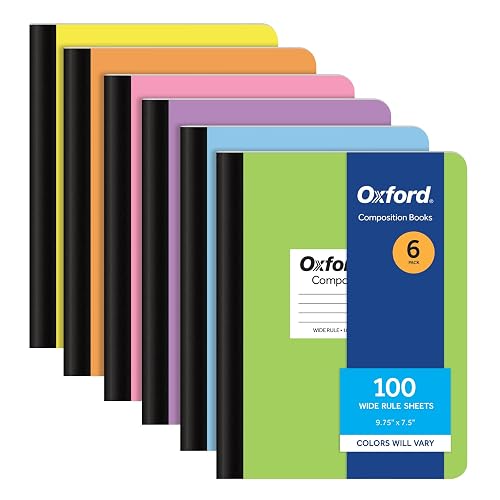
Composition book vs exercise book: the quick answer
An exercise book is a school notebook used for written work and notes. In US usage, a composition book often fills the same role. The overlap is real, but current products sold under the two labels can differ in size, page count, ruling, cover and binding.
Why the names change by market
Current reference material describes “exercise book” as a school-notebook term used in many markets and identifies “composition book” as a common US counterpart. Exercise books are commonly offered with lined or squared pages. US composition books likewise appear in lined, graph and plain formats.
Do not treat either term as a protected construction standard. Retailers and manufacturers use the labels differently.
Size is often the first practical difference
Traditional US composition books commonly use a footprint around 7.5 × 9.75 inches, while exercise-book catalogues often use A5, A4 and other regional sizes. Exceptions are common on both sides.
If dimensions matter, use our composition notebook size guide and verify the exact listing.
Compare ruling, not just the product name
Current composition books include wide ruled, college ruled, graph ruled and unruled products. Exercise books likewise appear with line or square ruling. The correct choice depends on the work.
For grid-based work, see our graph-ruled composition notebook guide. For larger handwriting, compare wide-ruled composition notebooks.
Sheets and pages can be described differently
A physical sheet has two sides. Some sellers advertise sheets; others emphasize writable pages. A 50-sheet book can therefore be described as 100 pages when both sides are counted. Check the unit before comparing capacity.
Binding is not guaranteed by either label
Traditional composition books are strongly associated with fixed binding, and current Roaring Spring examples use center-sewn and tape-bound construction. Current exercise-book catalogues also include saddle-stitched products. Neither label alone guarantees a specific binding.
For an adjacent format decision, see composition book vs spiral notebook.
Do not confuse an exercise book with a workbook
In stationery usage, an exercise book is generally a blank ruled, squared or plain notebook in which the student writes the work. A workbook usually contains preprinted questions, exercises or instructional material.
Follow the school requirement first
If a supply list asks specifically for a composition notebook, exercise book, A4 book, graph book or a particular ruling, follow that requirement. Matching the requested physical format matters more than regional naming.
Buying checklist
- What exact dimensions are required?
- Is the page lined, squared, graph or plain?
- Does the listing count sheets or page sides?
- Is the binding sewn, tape-bound, stapled or another construction?
- Is the cover flexible or rigid?
- Does a school list specify a regional term or format?
Bottom line
Composition book and exercise book overlap heavily as school-notebook terms, but they are not enough information to make a purchase. Verify size, ruling, capacity and construction on the exact product.
Frequently asked questions
These answers focus on terminology and the specifications that change how the notebook works.
Is a composition book the same as an exercise book?
They can serve the same school-notebook role, especially when comparing US terminology with usage in other markets, but the labels do not guarantee identical size, ruling or binding.
What is an exercise book called in the United States?
Composition book is a common US counterpart for a fixed school notebook, although “notebook” is also widely used and product terminology varies.
Is an exercise book the same as a workbook?
Usually no. An exercise book generally provides blank ruled, squared or plain pages for the student’s work; a workbook typically contains preprinted exercises or instructional content.
Which format should I buy?
Follow the school requirement first. Otherwise compare dimensions, ruling, sheet or page count, binding and cover rather than choosing from the name alone.
RELATED POST
